
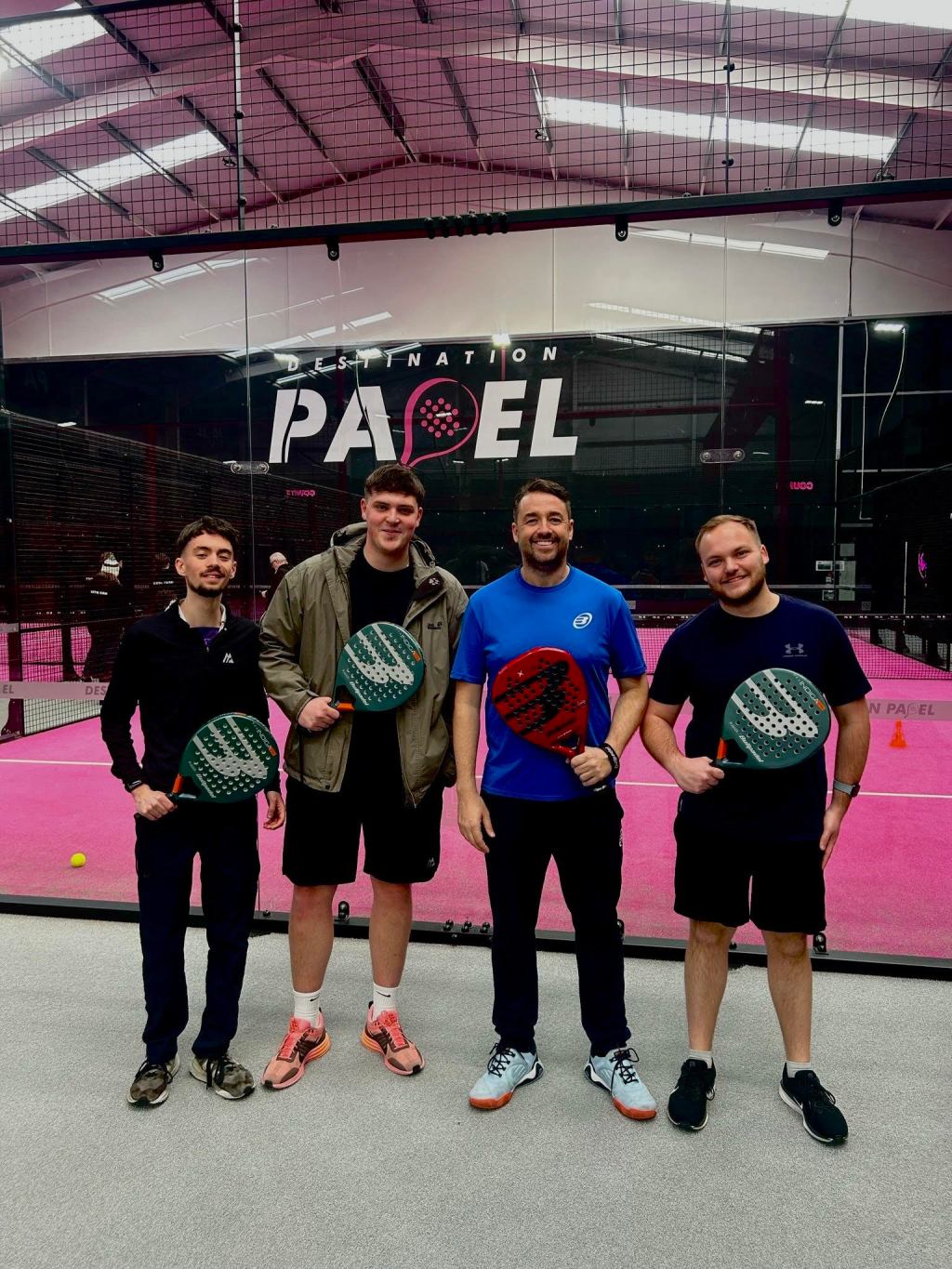
ProperPadel were lucky enough to be invited down to Destination Padel, Northwich on Tuesday 11th March to see the brilliant work that Jason Manford and his team are carrying out through his JM Padel Academy.
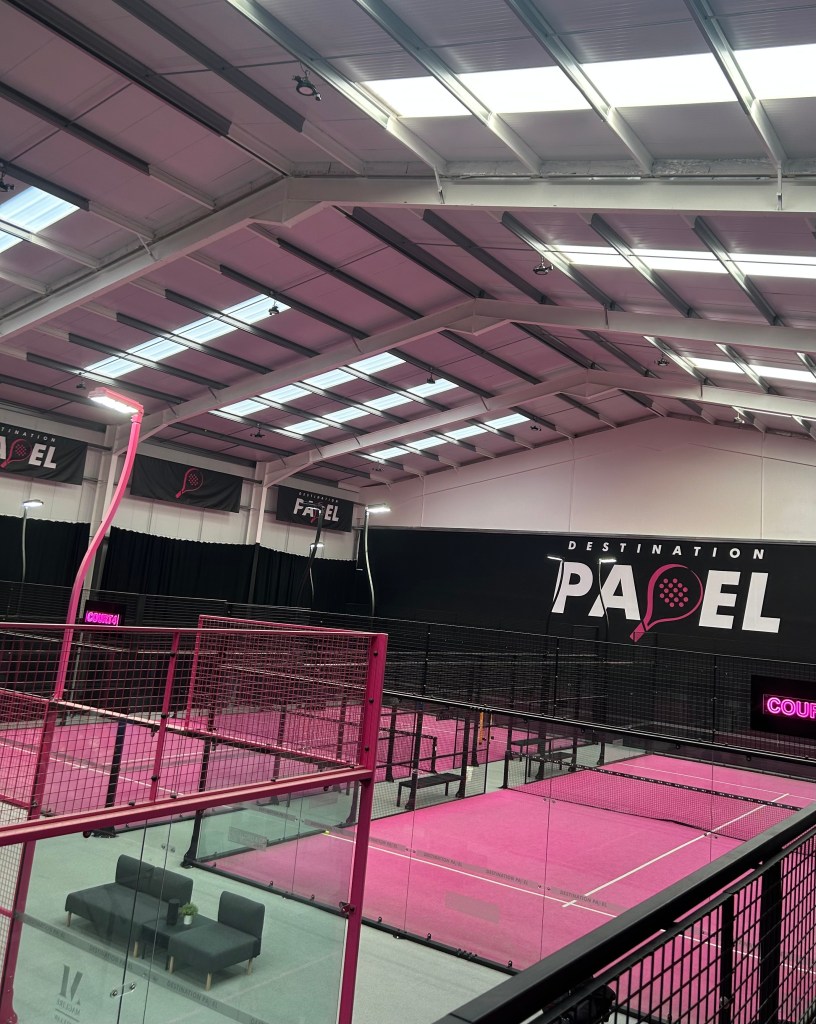
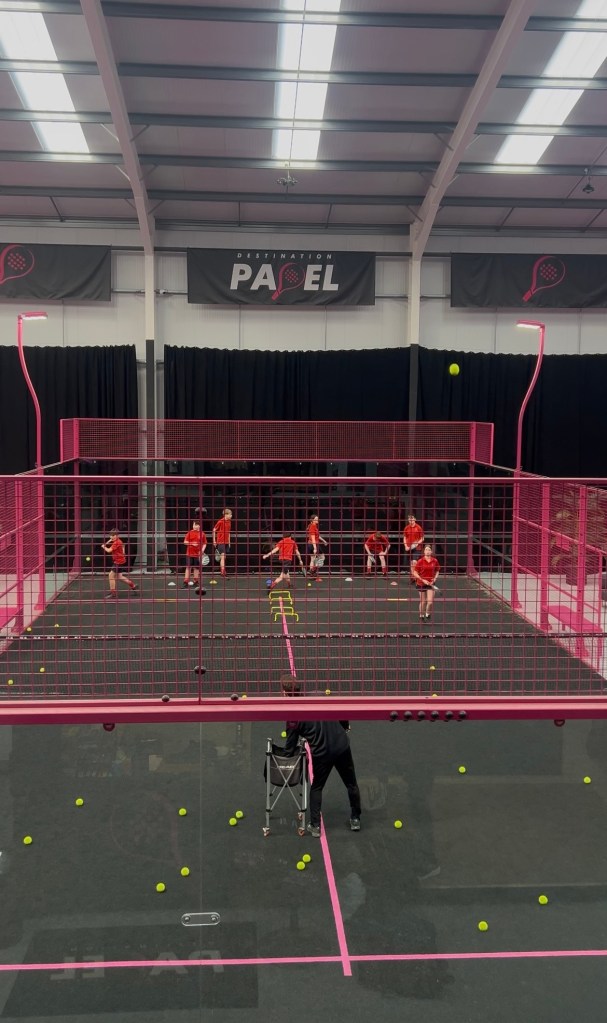
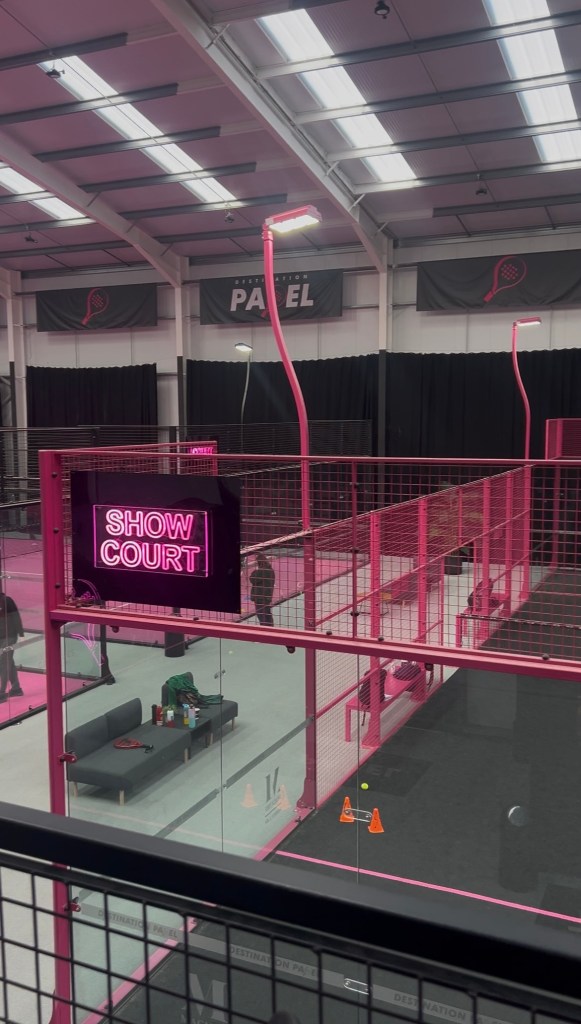
The event ran from 10am-12pm and allowed children from three different schools, Greenback School, Weaverham High School and Weaverham Forest Primary School to have a go at the fastest growing racquet sport in the world. The children were given access to five premium indoor courts at the Destination Padel venue, and were guided throughout the event by club coaches.
ProperPadel caught up with comedian, presenter and most importantly Padel fanatic, Jason Manford and when he was asked about why the JM Padel academy was set up, he explained:
“I am so in love with this sport. I play it four or five times a week and it sort of reminded me that ‘Oh, I wish I had played this when I was a kid, this is such a fun sport’. I played Tennis, which I also adore, but Tennis you know, has got a bit of an elitist reputation. It’s had hundreds of years of having a Royal Box, nice whites, the Wimbledon themes. I was very lucky to plan Tennis as a kid, they gave out free lessons to local council estate kids.”
“I was looking at Padel (now) and thought instantly wow this is great, but it’s expensive sometimes, you know, it’s £40 a court (for an hour) in a lot of places, good racquets you’re looking at a couple of hundred pounds, also sometimes the balls only last a few games.”
The expense of playing Padel is something which has always been in discussion within the UK as it is still in it’s development stages. Enthusiasts here in Britain are always envious of the prices seen over in Spain and other countries which have strong Padel backgrounds. There is the hope that the price will eventually balance itself out due to the surplus of courts popping up around the country.
“Time and money are the two most precious commodities and a lot of people don’t have those things so I thought, how do we make it accessible? Padel is right at the beginning of a promising cycle, so we can set the tone now of, you know what, Padel is for everyone, and that’s what I’m trying to do.”
“This isn’t a Padel vs Tennis thing, but, the hardest shot in Tennis is the first shot, usually. Trying to learn the serve, it sometimes takes years to get that right! Whereas with Padel, you can almost see it as an introduction into racquet sports, you could go ‘Oh, I love this, what else is out there?’. Some of the children that are at this event today for example are from local Badminton teams.”
“What has caught my eye with Padel is that 20, 25 minutes into the actual start of coaching, you can pretty much have a match. That is what kids want, especially in today’s world where people are bored after three minutes after scrolling for 30-second viral hits online.”
The ease of the sport is a major aspect as to why people fall in love with it, not only is it addicting but rallies are possible at all levels and fills people with a euphoric feeling of reward. For this exact reason, there is potential that this is the reason why younger children will get hooked on the sport and enhances its inclusivity.
After being asked about Padel’s potential growth on a more global scale, Jason answered:
“I think the growth will be gradual. However, I think the biggest thing that’ll happen is when it makes it into the Olympics. I think if we get into 2032 or 2036 then that will be the catalyst, you can’t rush these things. What I find exciting about the JM Padel Academy is that I would love one of these children to be there.”
“One of the exciting things about Padel is if it does make it into the 2032 Olympic games, the adult at that time who represents Great Britain has not even picked up a racquet yet, so that’s exciting, where are they? They’re out there, so I just want to cast this net as far as possible so everyone’s got an opportunity.”
The beauty of Padel is the speed of growth seen within players, the possibility of a player representing GB is not too farfetched. It’ll be rewarding for both the players and the academies popping up to have brought a player through to that standard and show what GB has on offer.
“What I’m trying to find is the funding to spread Padel across the UK, putting courts in slightly more deprived areas rather than the areas you are certain that people can definitely afford to play when they like. When it becomes even bigger, kids across the country in the future can hopefully say: ‘Oh, I already play that’.”
The JM Padel Academy has a clear emphasis on making Padel available for everybody to try it out, and when questioned about how important gender inclusivity is in the sport, he responded:
“I play mixed Padel more often than not. When contacting the schools, were strict on the principle that they should send an equal mix of students along to these sessions. Furthermore, we have kids here today from a local SEN school, the sport can be accessible for lots of different people. As far as males and females are concerned in Padel, it’s an equal game because it’s not a ‘power’ game, it’s mainly tactics based.”
“If you whack a ball as hard as you can against the glass, it’s going to come back close to the net for the other team’s next shot. You use your brain probably more than any other racquet sport because you’re thinking tactics all the time, that’s equal, men and women can think tactics equally.”
“It’s all about trying to encourage both genders, especially the younger girls, that you can do it. It’s not about ability at this stage, it’s about just having a go, picking up a racquet, hitting the ball and we can all do that, to a certain degree. I can’t wait for what is to come.”
If the JM Padel Academy is something that appeals to you, check out the Instagram page here: https://www.instagram.com/jm_pdl_academy_/
Subscribe to our mailing list today to stay updated with the latest content

 Proper Padel
Leave a comment